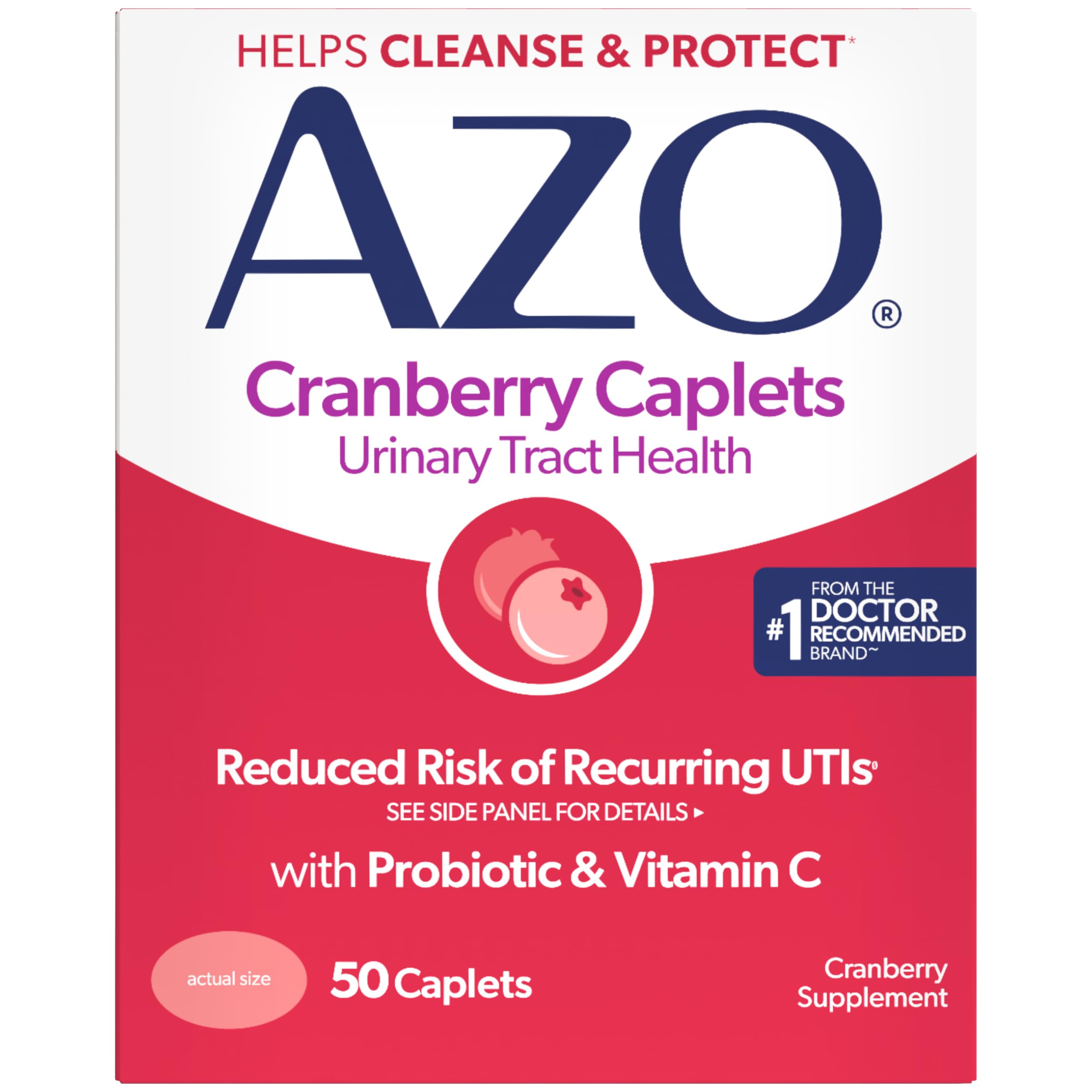
Quick read · AZO
AZO® Cranberry Caplets
Checked against public sources between July 21 and July 29, 2026 · LookCloser does not sell or recommend supplements.
Does the marketing hold up?
Every ingredient shows its amount · 4 ingredients listed. Every ingredient shows its real amount — nothing is hidden in a proprietary blend.
Is the dose real?Panel read — dose not verified4 ingredients listed; no advertised amount we could confirm against them
What a serving costsNo price found for this exact barcode
Is it tested?No testing claim made
Who’s behind it?USPTO lookup didn’t finisha gap in our records, not a finding about the brand
Is it the real thing?✓Barcode matches outside records
Trouble on record?✓No recalls found
The label itself
What the Supplement Facts panel says
Serving size Serven
| D-Mannose | 1000 mg |
|---|
| Proanthodidins | 1 Daily Value |
|---|
| Methenamine | 99.5 mg |
|---|
| Sodium Salicylate | 162.5 mg |
|---|
Printed on the package: #1 DOCTOR RECOMMENDED BRAND · DOCTOR RECOMMENDED BRAND
We read 4 lines from the package photograph. It is our transcript of the label, not the manufacturer’s panel, and it may be incomplete.
Quick read · 3 useful findingsWhat is worth knowing.
Headlines first. Open evidence only when you want the source trail.
CheckedIs the label honest?
Every ingredient shows its amount · 4 ingredients listed.
Every ingredient shows its real amount — nothing is hidden in a proprietary blend.
Evidence and sources
The panel gives a per-ingredient amount rather than hiding quantities inside a proprietary blend, so each one can be compared to published research.
Locked evidence record →Open the full source-linked findingCheckedWho is behind it?
The barcode identity checks out · 787651420677.
The barcode matches, so we are checking the right product rather than a look-alike.
Evidence and sources
The brand's store lists this exact barcode as “AZO® Cranberry Caplets” (variant: 50 Caplets) — identity confirmed across retailer listings.
Locked evidence record →Open the full source-linked findingCheckedCan you trust the review pattern?
We can see 34 of this product’s 561 reviews — the count rose between August 27, 2025 and August 15, 2026. That is too small a slice to say anything about the wider pattern.
A count that moves steadily is ordinary. A sudden burst is what deserves a closer look.
Evidence and sources
Written reviews rose from 527 to 561 between August 27, 2025 and August 15, 2026. The largest rise inside any single 30-day window was about 7, so the count moved in steps rather than in one burst.
Locked evidence record →Open the full source-linked findingWhat remains open 3
- No FDA recall matched this brand in the current search.
- We have not found a public label filing for this exact product.
- Barcode checksum is valid; no independent product record was found.
These are evidence gaps, not strikes against the product.
Where it sells
Price check for this exact product
Amazon
Exact UPC/GTIN match$7.48
matching UPC/GTIN · checked Sep 2, 2026
View on Amazon ↗Brand website
Exact UPC/GTIN match$7.99
matching UPC/GTIN · checked Jul 21, 2026
View on Brand website ↗iHerb
Exact UPC/GTIN match$8.34
4.6/5 · 6,653 ratings
matching UPC/GTIN · checked Jul 29, 2026
View on iHerb ↗Target
Not confirmedNo exact listing saved
We only show a price when the seller publishes the same barcode as the bottle. We haven’t found that match here.
Search Target ↗Walmart
Not confirmedNo exact listing saved
We only show a price when the seller publishes the same barcode as the bottle. We haven’t found that match here.
Search Walmart ↗Same UPC/GTIN observed across 3 sellers. Amazon was lowest at $7.48; iHerb was highest at $8.34 — a $0.86 range at check time.
Want the complete evidence trail?
The summary stops at product-specific facts. The full report preserves every source, calculation, limitation, and unresolved check for review or sharing.
Record built September 03, 2026. Sources: source listing observed at check time · USPTO Trademark Search · Keepa exact-listing history · NIH / published research · certification and regulator records where available. LookCloser publishes evidence and gaps; it does not advise for or against any supplement. Evidence-based corrections welcome.