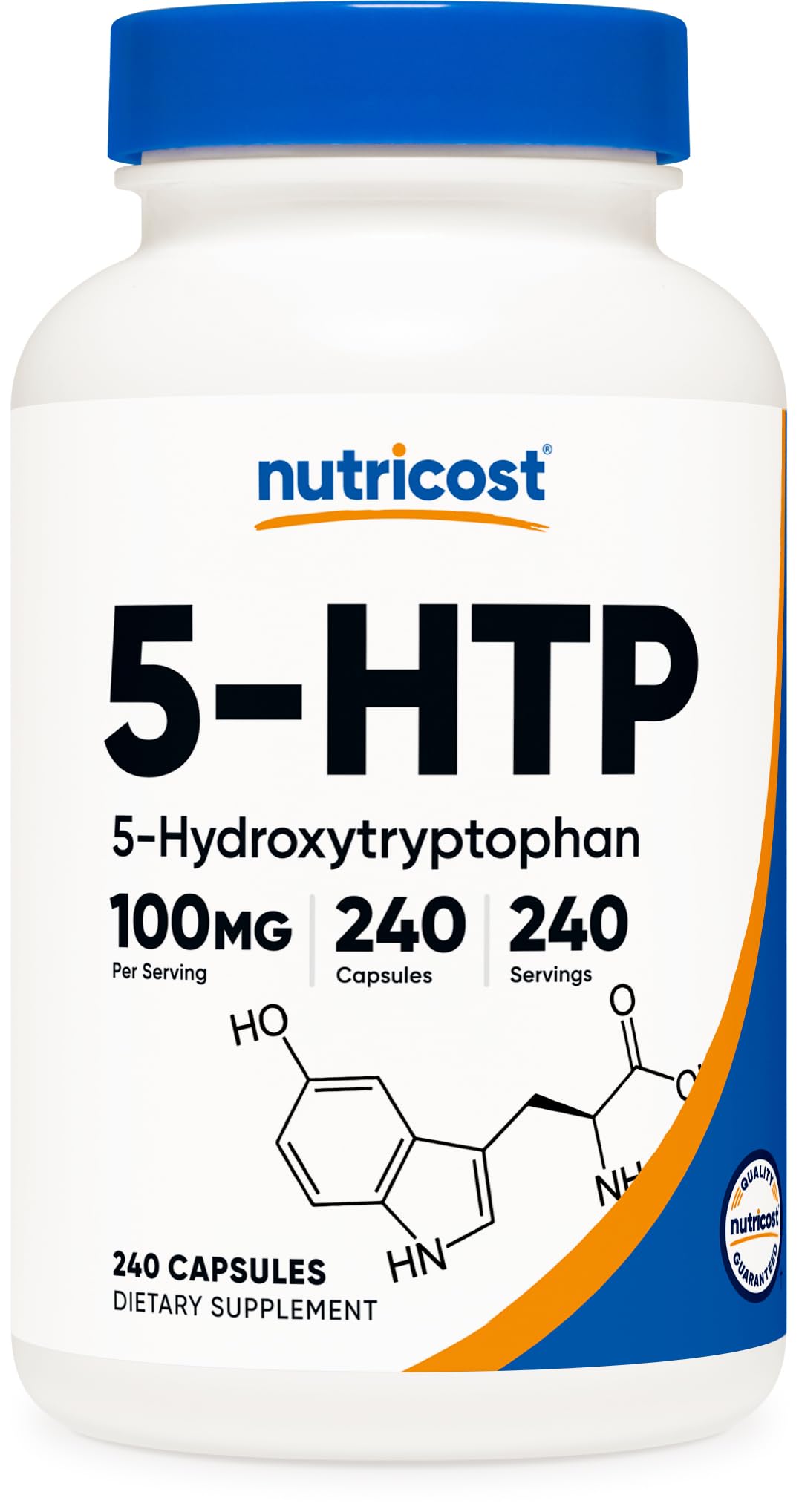
Exact product checked · GTIN 00810014675121Nutricost · checked Jul 22, 2026 · on sale since Dec 31, 2015🇺🇸 USPTO wordmark owner · eSupplements, LLC · UTAH, USAPackage says manufactured for: nutricost · 351 E 1750 N, Vineyard, UT 84059
Quick read · Nutricost
Nutricost 5-HTP 100mg
Checked against public sources between July 22 and August 31, 2026 · LookCloser does not sell or recommend supplements.
240capsules
240servings per container
Does the marketing hold up?
Package and trademark records name different responsible entities. The package says manufactured for: nutricost, 351 E 1750 N, Vineyard, UT 84059. USPTO names eSupplements, LLC as the exact wordmark owner. That can be a normal distributor, manufacturer, or licensing…
Is the dose real?✓Listing and panel agreeboth say 100 mg of 5-HTP
What a serving costs$0.08per serving, at the checked price
Is it tested?Claimed — no lab or certificate found
Who’s behind it?🇺🇸eSupplements, LLClimited liability company · UTAH, USA
Is it the real thing?✓Barcode matches outside records
Trouble on record?Recall check not run yeta gap in our records, not a finding about the product
“Couldn’t verify” means we looked and found no public proof — not a mark against the product. Most supplement claims cannot be independently verified by anyone, so grey is the normal state of this industry.
1◖ partly confirmed2? couldn’t verifyno contradictions · no recalls
The label itself
What the Supplement Facts panel says
Serving size 1 Capsule · 240 servings per container
5-HTP (5-Hydroxytryptophan)
100 mg
Printed on the package:QUALITY GUARANTEED · GMP COMPLIANT FACILITY · NON-GMO PRODUCT · VEGETARIAN PRODUCT · QUALITY nutricost GUARANTEED · GLUTEN-FREE PRODUCT · nutricost QUALITY ASSURED · THIRD PARTY TESTED
We read 1 lines from the package photograph. It is our transcript of the label, not the manufacturer’s panel, and it may be incomplete.
Marketing claims, checked
The checks, one by one
The public sources did not settle the marketing promises on this label.
◐Partly confirmed1
“Manufacturing: Manufactured in the USA under strict guidelines, our supplements are produced in GMP-compliant and FDA-registered facilities, and…”
“GMP-certified” describes factory processes, not what is in the bottle. The claim does not name a certifier or public register that a shopper can check.
No named laboratory or lot-specific certificate was found for this exact product. A related brand page repeats a testing claim but names no issuer; its UPC is not published. NSF, IFOS, USP, and Informed-Sport were not checked in this record. This is a public-evidence limit, not a finding that testing did not occur.
We have not found a public label filing for this exact product.
These are evidence gaps, not strikes against the product.
Who owns the brand wordmark?
🇺🇸
eSupplements, LLCLimited Liability Company · exact supplement-class mark for NUTRICOST
Registration5333879
Registered2017-11-14
AssignmentsNo transfers recorded
Filed address UTAH, USA) DBA Nutricost; 351 E 1750 N, VINEYARD, UTAH 84059, UNITED STATES
USPTO identifies the public owner or applicant behind this brand wordmark. This does not by itself identify the product manufacturer or prove where the product was made. Open USPTO source ↗
Same UPC/GTIN observed across 2 sellers at the same price at check time.
The brand-page price is shown as a shopping lead only. It is excluded from the exact-product price difference because the page does not publish this record's matching UPC/GTIN.
Reference prices only · no affiliate links · every compared seller must publish the matching UPC/GTIN.
Want to inspect the evidence?
The full report shows every source, the exact unresolved question, and the documentation that would settle it.
Record built September 03, 2026. Sources: source listing observed at check time · USPTO Trademark Search · Keepa exact-listing history · NIH / published research · certification and regulator records where available. LookCloser publishes evidence and gaps; it does not advise for or against any supplement. Evidence-based corrections welcome.