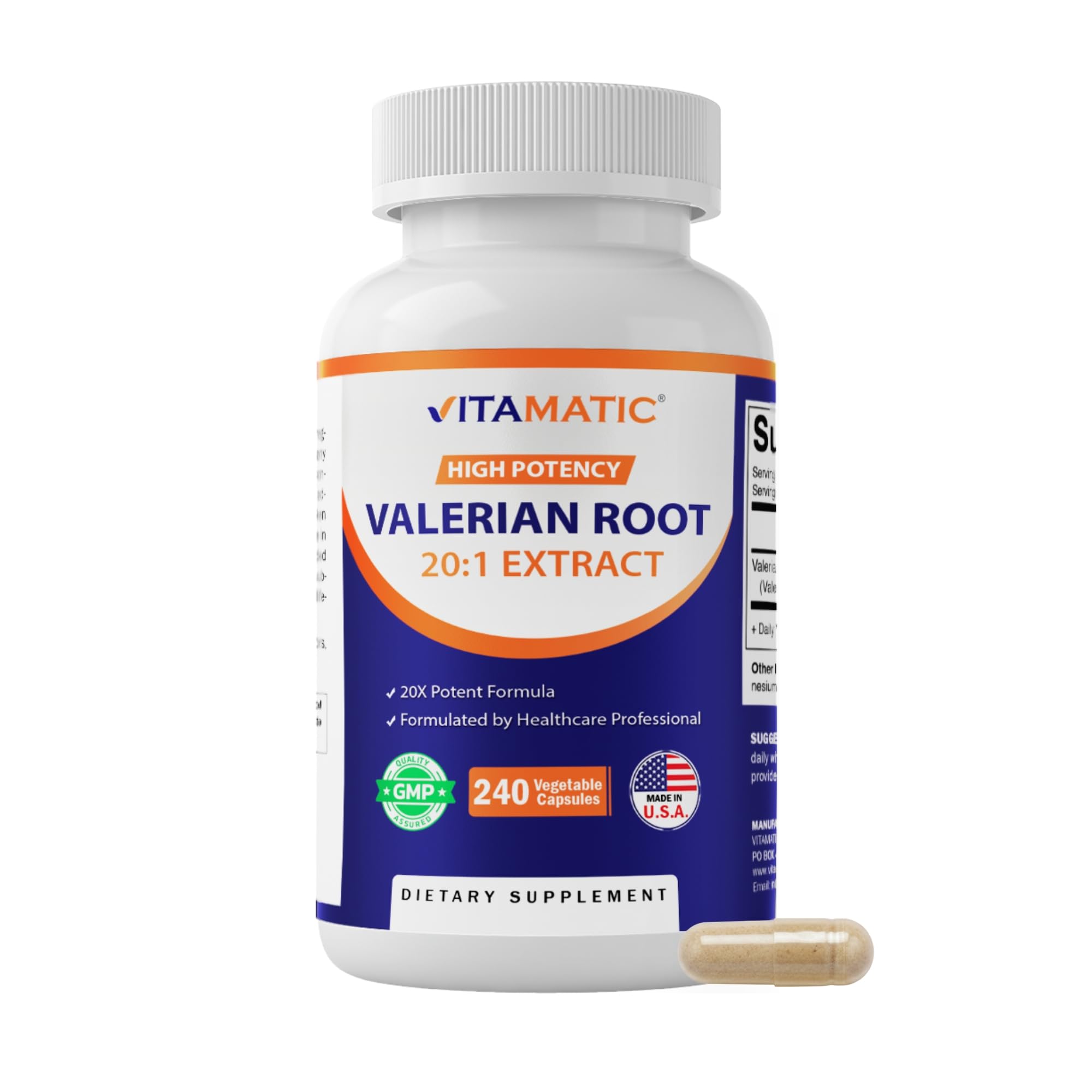
Exact product checked · GTIN 00810078476054Vitamatic · checked Jul 22, 2026 · on sale since Jan 3, 2021USPTO returned 2 exact supplement-class owner records · inspect the identity trailPackage says manufactured by: VITAMATIC · PO BOX
Quick read · Vitamatic
Vitamatic Valerian Root 20:1 Extract 250 mg
Checked against public sources between July 22 and August 31, 2026 · LookCloser does not sell or recommend supplements.
240capsules
240servings per container
Does the marketing hold up?
Registered owner records: PROEMPIRE LIMITED LIABILITY COMPANY · Proempire LLC. The public ownership record is ambiguous. We show the exact candidates instead of choosing one by name similarity.
Is the dose real?Can’t check — no panel filed
What a serving costs$0.06per serving, at the checked price
Is it tested?No testing claim made
Who’s behind it?USPTO lists 2 owner recordssame brand name, more than one registrant — we don’t choose between them
Is it the real thing?✓Barcode matches outside records
Trouble on record?Recall check not run yeta gap in our records, not a finding about the product
“Couldn’t verify” means we looked and found no public proof — not a mark against the product. Most supplement claims cannot be independently verified by anyone, so grey is the normal state of this industry.
1◖ partly confirmed1? couldn’t verifyno contradictions · no recalls
Marketing claims, checked
The checks, one by one
The public sources did not settle the marketing promises on this label.
◐Partly confirmed1
“You Can Trust: Manufactured in the USA in a GMP-compliant facility using carefully selected”
“GMP-certified” describes factory processes, not what is in the bottle. The claim does not name a certifier or public register that a shopper can check.
USPTO returned multiple live supplement-class records for the exact brand wordmark: PROEMPIRE LIMITED LIABILITY COMPANY, Proempire LLC. These records answer who owns registrations for the brand; the separate product-to-owner or manufacturer link remains open.
We have not found a public label filing for this exact product.
Barcode checksum is valid; no independent product record was found.
These are evidence gaps, not strikes against the product.
Who owns the brand wordmark?
The brand has 2 exact supplement-class records
These are the USPTO records behind the brand name. We show them all rather than choosing one by similarity.
🇺🇸PROEMPIRE LIMITED LIABILITY COMPANY
New Jersey, USA · Registration 8169241
161 16th Ave, Elmwood Park, New Jersey 07407, UNITED STATES
Goods covered by this record
IC 035: On-line retail store services featuring vitamins, dietary supplements, food products, and beauty products.
🇺🇸Proempire LLC
NEW JERSEY, USA · Registration 6270114
161 16th Ave, Elmwood Park, NEW JERSEY 07407, UNITED STATES
Goods covered by this record
IC 005: Acai powder dietary supplements; Albumin dietary supplements; Alginate dietary supplements; Alkalinity buffer supplements for live coral for use in aquariums; Animal feed additive for use as a nutritional supplement for medical purposes; Animal feed additives for use as nutritional supplements; Animal feed additives for use as nutritional supplements for promoting digestion and eliminating toxins; Animal feed supplements; Bee pollen for use as a dietary food supplement; Beverages containing chlorophyll for use as a nutritional supplement; Beverages containing probiotics, prebiotics and vitamin C for use as a nutritional supplement; Calcium montmorillonite clay for therapeutic purposes used to enhance the production of enzymes in living beings or as a mineral supplement; Calcium supplements; Calcium-based nutrient supplements for live coral for use in aquariums; Casein dietary supplements; Delivery agents in the form of dissolvable films, coatings for tablets that facilitate the delivery of nutritional supplements; Dietary and nutritional supplements; Dietary and nutritional supplements containing nut oil and fish oil; Dietary and nutritional supplements for endurance sports; Dietary and nutritional supplements for animals and weight loss; Dietary and nutritional supplements used for weight loss; Dietary beverage supplements for human consumption in liquid and dry mix form for therapeutic purposes; Dietary fiber for use as an ingredient in the manufacture of dietary supplements; Dietary food supplements; Dietary pet supplements in the form of pet treats; Dietary supplement beverage for aiding sleep, promoting digestion; Dietary supplement drink mixes; Dietary supplement for eliminating toxins from the intestinal tract; Dietary supplemental drinks; Dietary supplemental drinks in the nature of vitamin and mineral beverages; Dietary supplements; Dietary supplements also containing flaxseed, wheat and turmeric; Dietary supplements consisting primarily of iron, calcium and zinc; Dietary supplements for animals; Dietary supplements for controlling cholesterol; Dietary supplements for human beings and animals; Dietary supplements for human consumption; Dietary supplements for humans and animals; Dietary supplements for pets; Dietary supplements for pets in the nature of a powdered drink mix; Dietary supplements for treatment of claustrophobia; Dietary supplements for urinary health; Dietary supplements for humans, teenagers, dogs, or treating nausea, treating fatigue; Dietary supplements in the form of capsules, liquid and powder; Dietary supplements in the nature of weight loss powders; Dietary supplements with a cosmetic effect; Enzyme dietary supplements; Enzyme food supplements; Feed supplements for cats, dogs, pets and livestock; Flavonoids for use as a dietary supplement; Flaxseed dietary supplements; Flaxseed oil dietary supplements; Folic acid dietary supplements; Food supplements; Food supplements for humans, teenagers, dogs, or treating nausea, treating fatigue; Food supplements, namely, anti-oxidants; Fungal extracts sold as a component ingredient of nutritional supplements and vitamins; Ganoderma lucidum spore powder dietary supplements; Glucose dietary supplements; Green coffee bean extracts for use as dietary supplements; Ground flaxseed fiber for use as a dietary supplement; Health food supplements; Herbal supplements; Herbal supplements for sleeping problems; Herbal supplements for boosting energy and sexual dysfunction; Homeopathic supplements; Ketogenic dietary and nutritional supplements; Ketogenic dietary and nutritional supplements used for weight loss; Ketone ester beverages for use as a dietary supplement; Khorasan wheatgrass for use as a dietary supplement; Lecithin dietary supplements; Lecithin for use as a dietary supplement; Linseed dietary supplements; Linseed oil dietary supplements; Liquid herbal supplements; Liquid nutritional supplement; Liquid protein supplements; Liquid vitamin supplements; Medicated supplements for foodstuffs for animals; Medicated supplements for foodstuffs for babies; Mineral food supplements; Mineral nutritional supplements; Mineral supplements; Natural dietary supplements; Natural dietary supplements for the treatment of mental health and claustrophobia; Natural dietary supplements for treatment of claustrophobia; Natural herbal supplements; Natural supplements for treating candida; Natural supplements for treating depression and anxiety; Natural supplements for treating erectile dysfunction; Non-medicated additives for animal feed for use as nutritional supplements; Nopal cactus juice for use as a nutritional supplement; Nutraceuticals for use as a dietary supplement; Nutraceuticals for use as a dietary supplement for promoting digestion, for liver support; Nutritional and dietary supplements formed and packaged as bars; Nutritional supplement energy bars; Nutritional supplement for eliminating toxins from the body; Nutritional supplement for eliminating toxins from the intestinal tract; Nutritional supplement in the nature of a nutrient-dense, protein-based drink mix; Nutritional supplement meal replacement bars for boosting energy; Nutritional supplement shakes; Nutritional supplements; Nutritional supplements consisting primarily of iron, calcium and zinc; Nutritional supplements for boosting energy and promoting healthy skin; Nutritional supplements for cats, dogs, pets and livestock; Nutritional supplements in capsule form for dogs; Nutritional supplements in lotion form sold as a component of nutritional skin care products; Nutritional supplements in the form of capsules, tablets, caplets, powder, syrups, gummies and gels; Nutritional supplements in the nature of nutritionally fortified soft chews; Nutritional supplements, namely, carbohydrates in powdered form; Nutritional supplements, namely, probiotic compositions; Pine pollen dietary supplements; Pollen dietary supplements; Powdered fruit-flavored dietary supplement drink mix; Powdered nutritional supplement concentrate; Powdered nutritional supplement drink mix; Powdered nutritional supplement drink mix and concentrate; Powdered nutritional supplement drink mix containing protein and vitamin C; Prebiotic supplements; Probiotic supplements; Propolis dietary supplements; Protein dietary supplements; Protein supplement shakes; Protein supplement shakes for weight gain purposes; Protein supplements; Protein supplements for animals; Protein supplements formed and packaged as bars; Royal jelly dietary supplements; Soy isoflavone dietary supplements; Soy protein dietary supplements; Soy protein for use as a nutritional supplement in various powdered and ready-to-drink beverages; Vegan liquid protein supplements; Vegan protein for use as a nutritional supplement in ready-to-drink beverages; Vitamin and mineral supplements; Vitamin and mineral supplements for mixing with dog food, cereal and yogurt; Vitamin supplement in tablet form for use in making an effervescent beverage when added to water; Vitamin supplement patches; Vitamin supplements; Vitamins and dietary food supplements for animals; Weight management supplements; Wheat for use as a dietary supplement; Wheat germ dietary supplements; Wheatgrass for use as a dietary supplement; Whey protein supplements; Yeast dietary supplements; Zinc supplement lozenges.
This answers who owns registrations for the brand wordmark. It does not by itself prove which entity made, imported, or sold this specific product. Open USPTO source ↗
Only one exact price was available at build time; prices change by date, seller, and promotion.
The brand-page price is shown as a shopping lead only. It is excluded from the exact-product price difference because the page does not publish this record's matching UPC/GTIN.
The observed listing and related brand page repeat 240 capsules. That confirms cross-page consistency of the published claim, not the product contents.
Reference prices only · no affiliate links · every compared seller must publish the matching UPC/GTIN.
Want to inspect the evidence?
The full report shows every source, the exact unresolved question, and the documentation that would settle it.
Record built September 03, 2026. Sources: source listing observed at check time · USPTO Trademark Search · Keepa exact-listing history · NIH / published research · certification and regulator records where available. LookCloser publishes evidence and gaps; it does not advise for or against any supplement. Evidence-based corrections welcome.