Full record · 852933008994 · back to the summary
Olly Lovin' Libido
4 concrete dimensions confirmed · 1 still open · built September 03, 2026
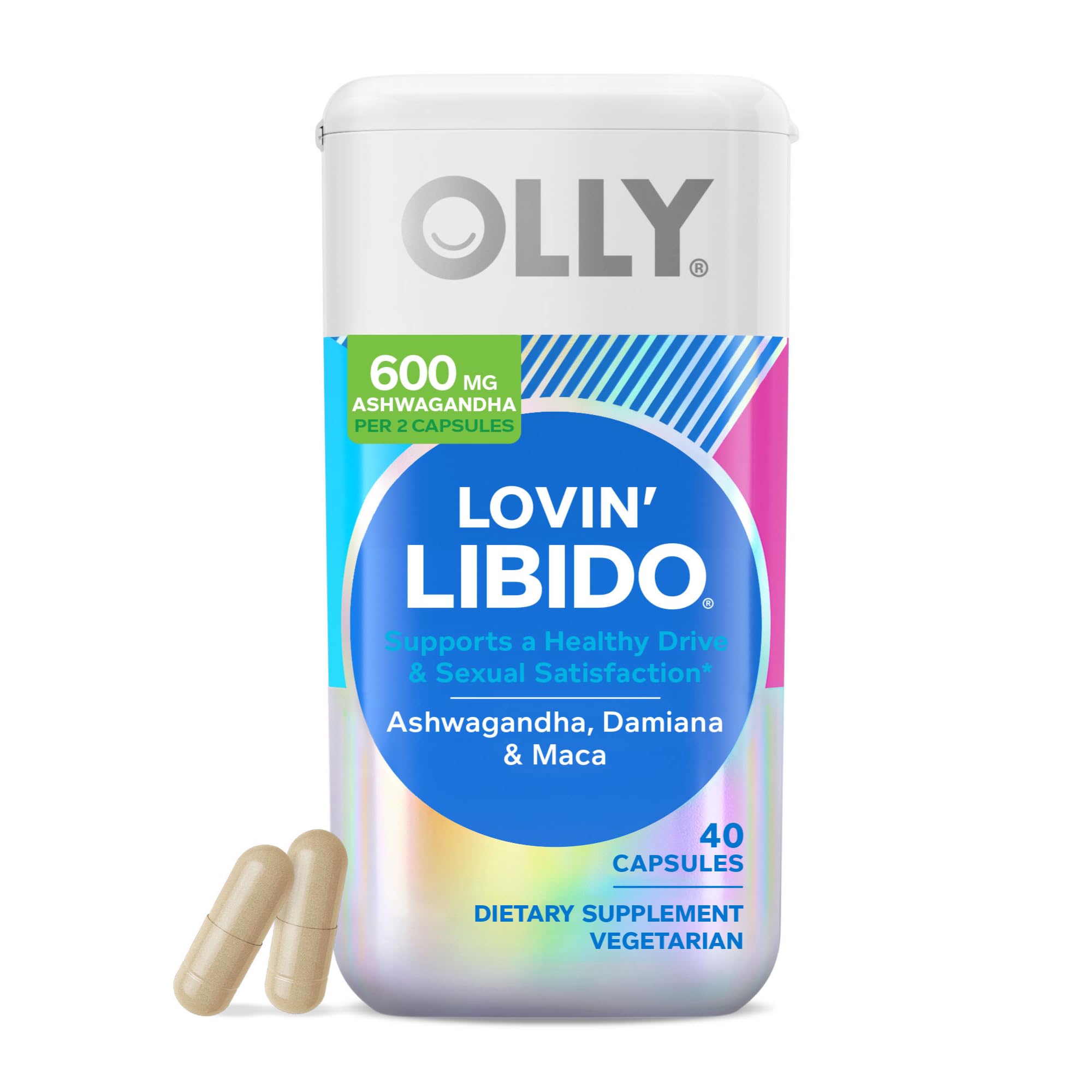
Exact product checkedGTIN 00852933008994 · checked 2026-09-02
Free to read, download and share — no signup, no paywall, no ads.
How to read this report
What this is. We compare what a listing claims against what public records show — label arithmetic, barcode registries, NIH’s label catalog, FDA enforcement data, certification registries, and published research. Every statement below traces to one of those.
What the states mean. Confirmed = an outside source agrees. Contradicted = an outside source disagrees. Caution = something needs explaining. No data = we looked and found nothing — a gap, not a strike.
What it is not. A clean record is not an endorsement and never proof a product works. A thin record is not an accusation. We publish evidence and gaps; the conclusion is yours. Nothing here is medical advice.
Something wrong? Every figure is meant to be checkable — sources are named and linked. Send a correction and we’ll fix the record.
Panel, decoded
The 600 mg ksm-66® ashwagandha extract (withania somnifera, root) claim matches the panel
MARKETING600 mg — per-serving claim
PANELKSM-66® Ashwagandha Extract (Withania somnifera, root) 600 mg — same amountKSM-66® Ashwagandha Extract (Withania somnifera, root) 600 mg + Damiana Extract (Turnera diffusa, leaf) 200 mg + Maca Extract (Lepidium meyenii, root) 200 mg
matches panelWe did the comparison: the listing claims 600 mg of ksm-66® ashwagandha extract (withania somnifera, root), and the listing-image panel shows 600 mg ksm-66® ashwagandha extract (withania somnifera, root) serving size 2 capsules. Those amounts agree. This is internal consistency, not independent lab testing.
| Panel row | Amount | %DV | What to notice |
|---|
| KSM-66® Ashwagandha Extract (Withania somnifera, root) | 600 mg | — | |
| Damiana Extract (Turnera diffusa, leaf) | 200 mg | — | |
| Maca Extract (Lepidium meyenii, root) | 200 mg | — | |
FDA rules (21 CFR 101.36) require the amount of each dietary ingredient per serving unless hidden in a listed “proprietary blend” (legal, but a transparency yellow flag). A label stating no amount at all is non-compliant — a checkable red flag. This panel states amounts; any remaining comparison concerns the front-label framing.
vision:google/gemini-2.5-flash Amounts are shown as listed panel data, not independently lab-tested contents.
Every check we ran
Confirmed evidence
What checked out5
These checks found support in the public record. They confirm specific facts, not the product as a whole.
✓
Ashwagandha dose matches the amounts used in studies
label claims 600 mg/serving — within the range commonly used in research (trials mostly use 250–600 mg/day of root extract). Sources: NIH NCCIH — Ashwagandha, PubMed search: ashwagandha randomized trial.
✓
Every ingredient amount is disclosed
The panel gives a per-ingredient amount rather than hiding quantities inside a proprietary blend, so each one can be compared to published research.
✓
Exact trademark owner identified
USPTO lists OLLY PBC (CORPORATION) in DELAWARE, USA for the exact brand wordmark. This identifies the USPTO mark owner or applicant; it does not by itself prove who manufactures or sells this product.
✓
Found on the brand's own store
The brand's store lists this exact barcode as “Lovin' Libido” (variant: Default Title) — identity confirmed across retailer listings.
✓
Barcode confirmed in an outside database
Open Food Facts resolves 852933008994 to "OLLY LOVIN LIBIDO" (OLLY) — consistent with this listing.
Documented concerns
What needs caution0
These are documented contradictions or claims that need more evidence. They are separate from missing data.
No contradictions or product-specific cautions were found at this check depth.
Unresolved public record
What is still missing8
We looked for these signals but could not settle them from public sources. A gap is not a strike.
…
Listing claim matches the label panel
The listing claims 600 mg; the photo-read Supplement Facts panel shows KSM-66® Ashwagandha Extract (Withania somnifera, root) at 600 mg per serving — the listing text and its photo-read panel agree; this is internal consistency, not independent testing.
…
Cost to reach a studied dose
At 1.0 serving(s) a day to reach the low end of the studied range (250–600 mg), this product runs roughly $25 per month. A price observation, not a recommendation.
…
Research context is available for the listed ingredients
Published sources describe how ashwagandha, maca root have been studied. This is ingredient context only; the record does not establish that this product delivers the studied dose or outcome. Sources: NIH NCCIH — Ashwagandha, PubMed search: ashwagandha randomized trial.
…
Certified by NSF — contents and contaminants checked
OLLY, Public Benefit Corporation appears in NSF’s certified-products registry with 10 certified product(s), but we couldn’t confirm this exact listing is among them. Closest listed product: “LOVIN' LIBIDO”. Certification covers contents and contaminants — not effectiveness.
…
This category has documented FDA fraud risk
FDA's health-fraud program documents sexual-enhancement products as the most common supplement category found to contain undeclared prescription-drug ingredients. This is a category-level documented fact from FDA's public database — not a test result for this specific product. Source: fda.gov (linked in Related research).
…
Public label filing not saved
We have not found a public label filing for this exact product. That is a gap in our records, not evidence that no filing exists.
…
This item belongs to a catalog variation family
The paid catalog links this exact item to a parent listing. Review counts on public product pages may be shared across sizes, flavors, or other variants, so the count history is listing context — not evidence that reviewers received or tested this exact variant.
…
180-day review-count history is on file
Exact-listing history records written-review counts from 770 on 2025-07-30 to 824 on 2026-08-28 (net +54). Count movements can reflect sales, listing variants, collection resets, or moderation; this history does not establish whether reviews are authentic.
What to ask and check
What would settle the open questions
Why is this shown?
Everything we couldn’t verify is something a person can still ask about. Rather than leave gaps sitting as dead ends, we turn each one into a specific question — the exact document, citation, or number that would settle it — plus the things you can confirm yourself with the bottle in your hand.
Ask the brand or seller
1
Which specific study supports this claim — and was it run on this exact formula?
Ask for the citation, how many people took part, the dose used, and whether the study tested this product or just one ingredient in it. Ingredient research is not product evidence.
2
Is this label filed with NIH’s Dietary Supplement Label Database (DSLD)?
Filing is voluntary, so absence proves nothing — but a filed label puts the full ingredient table on public record where anyone can read it.
Most brands and sellers publish a contact route. A clear answer adds evidence to the record; no answer leaves the question open.
Check for yourself — no one’s permission needed
1
Compare the panel on the bottle in your hand to the one shown in this record.
Ours was read from listing photos and can contain reading errors. The physical label is the source of truth — if they disagree, tell us and we’ll correct the record.
2
Scan the barcode on the package and confirm it reads 852933008994.
A mismatch between the barcode on the box and the one on the listing is worth pausing over — it can indicate a different variant, a repack, or a counterfeit.
3
Look the product up yourself in NSF’s certified-products registry.
Search “OLLY, Public Benefit Corporation” at info.nsf.org — certification covers contents and contaminants, not effectiveness.
4
Check the lot number and expiry on the bottle against any COA you’re given.
A certificate that doesn’t name your lot doesn’t describe what you’re holding.
These are the open questions on this specific record — not a warning about the product, and not a suggestion to buy or avoid it. Getting them answered is how you decide for yourself.
What the listing promises — claim by claim
Why is this shown?
A listing’s promises are the reason people buy. Each one gets its own row: what was promised, what evidence would settle it, and what we could actually find. We never call a claim false — only whether proof proportionate to it exists on the public record.
| Claim | Status | What we found |
|---|
| Clinical-evidence claim “…Lovin’ Libido is packed with traditional botanicals to help boost desire, enhance arousal and support sexual satisfaction for women* Clinically studied Ashwagandha helps” | No evidence located We looked for: a named, citable clinical study of this product or formula | We found no named, citable study of this product or formula. The claim may rest on ingredient research rather than a trial of this product. |
| Benefit claim “OLLY Lovin Libido Capsules, Boost Desire With Ashwagandha, Maca & Damiana, Vegetarian, Supplement for Women, 20 Day Supply - 40 Count…” | Partly supported We looked for: whether the ingredient doses on the label match the doses used in published research | Ingredient evidence exists; on dose: label claims 600 mg/serving — within the range commonly used in research (trials mostly use 250–600 mg/day of root extract). |
“No evidence located” does not mean a claim is false — it means the seller has not put evidence proportionate to the claim on the public record, and we could not find any. Absence of proof is not proof of absence.
This label vs. the doses studied
Why is this shown?
An ingredient can be well-studied at one amount and barely studied at the amount in your bottle. This lines the label up against the doses researchers actually used. It answers ‘are these the same numbers?’ — never ‘should you take this?’
| Ingredient | Where this label sits | Reading |
|---|
| KSM-66® Ashwagandha Extract (Withania somnif | shaded = doses used in studies (250 mg–600 mg) · bar = this label | 600 mg — within the studied range |
| Maca Extract (Lepidium meyenii, root) | shaded = doses used in studies (1.5 g–3 g) · bar = this label | 200 mg — below the studied range |
Matching a studied dose does not mean the product works, and missing it does not mean it fails — it shows whether the label and the research are talking about the same amounts. Not a recommendation to take any amount.
Verifiability profile — 4 of 6 public signals
✓ Per-serving dose established✓ UPC / GTIN published✓ Supplement Facts visible in photos✓ Brand's own store found· Found in NIH's label catalog (DSLD) — not published· Third-party lab named or registry-certified — not published
What this listing gives the public to check. Publishing these signals doesn't prove quality — but withholding them means claims can only be taken on faith.
Identity
| UPC (barcode) — also our record ID | 852933008994 — via source listing UPC |
| Brand | OLLY |
| Source listing identifier | B08YH3VYCB |
| Retailer listing title | OLLY Lovin Libido Capsules, Boost Desire With Ashwagandha, Maca & Dami… show full title OLLY Lovin Libido Capsules, Boost Desire With Ashwagandha, Maca & Damiana, Vegetarian, Supplement for Women, 20 Day Supply - 40 Count |
| USPTO brand owner | OLLY PBC · CORPORATION · DELAWARE, USA |
| Owner filed address | 86 Graham Street, Suite 200, San Francisco, California 94129, UNITED STATES |
From the label (photo-read)
| Serving size | Serving Size 2 Capsules |
| Servings per container | 20 |
| Pack statement | 40 CAPSULES |
| Badges printed on pack | VEGETARIAN, Certified B Corporation, THE OLLY FEEL-GOOD PROJECT, NSF, DIETARY SUPPLEMENT, B Corp Certified, CONTENTS CERTIFIED, Certified |
Supplement Facts panel (photo-read):
| Ingredient | Amount per serving | Reading confidence |
|---|
| KSM-66® Ashwagandha Extract (Withania somnifera, root) | 600 mg | High clearly legible in the photo |
| Damiana Extract (Turnera diffusa, leaf) | 200 mg | High clearly legible in the photo |
| Maca Extract (Lepidium meyenii, root) | 200 mg | High clearly legible in the photo |
Claims printed on the packaging:
“600 MG ASHWAGANDHA PER 2 CAPSULES” · “Supports a Healthy Drive & Sexual Satisfaction*” · “Ashwagandha, Damiana & Maca” · “The Goods Inside” · “Ashwagandha Clinically studied herb that enhances arousal, boosts desire and supports satisfaction.” · “Botanical Extracts Historically used Damiana leaf and Maca root.” · “Take 2 capsules daily with water.” · “No synthetic flavors or colors”
Read by a vision model from 8 listing photos — verbatim extraction; OCR errors possible. Spot a mistake? It will be corrected on review.
Listed ingredients (as stated on the listing)
, including Ashwagandha to help boost desire, enhance arousal and even support satisfaction for women
Where it sells
Brand store olly.com: 71 supplement products (+2 merch items) — for comparison, single-focus brands typically carry 5–30 products; very broad catalogs are common among companies that rebrand ready-made formulas — a pattern note, not a verdict.
Reference links for identification only — LookCloser has no affiliate relationships and earns nothing from any link on this page.
Ingredient science — NIH references
Ashwagandha — NIH ODS · MedlinePlus · PubMed (204) · botanical; liver-injury case reports exist
Reference data from the NIH Office of Dietary Supplements, IOM Dietary Reference Intakes, and PubMed. A Tolerable Upper Intake Level is a documented reference figure, not a safety verdict — both the listed amount and the reference are shown for your own judgment. LookCloser gives no medical advice.
Record 852933008994 · built September 03, 2026 · lookcloser.ai · corrections@lookcloser.ai
