“sea moss capsules also promotes healthy skin, hair, and”
Evidence →Published research exists for ingredients in this formula. Whether this product’s doses match those studies could not be confirmed.
Checked against public sources on July 21, 2026 · LookCloser does not sell or recommend supplements.
Does the marketing hold up?
Research links are available for turmeric / curcumin, ashwagandha. Use the linked research to check whether the ingredient and outcome you care about are actually connected. Ingredient evidence does not verify this product.
“Couldn’t verify” means we looked and found no public proof — not a mark against the product. Most supplement claims cannot be independently verified by anyone, so grey is the normal state of this industry.
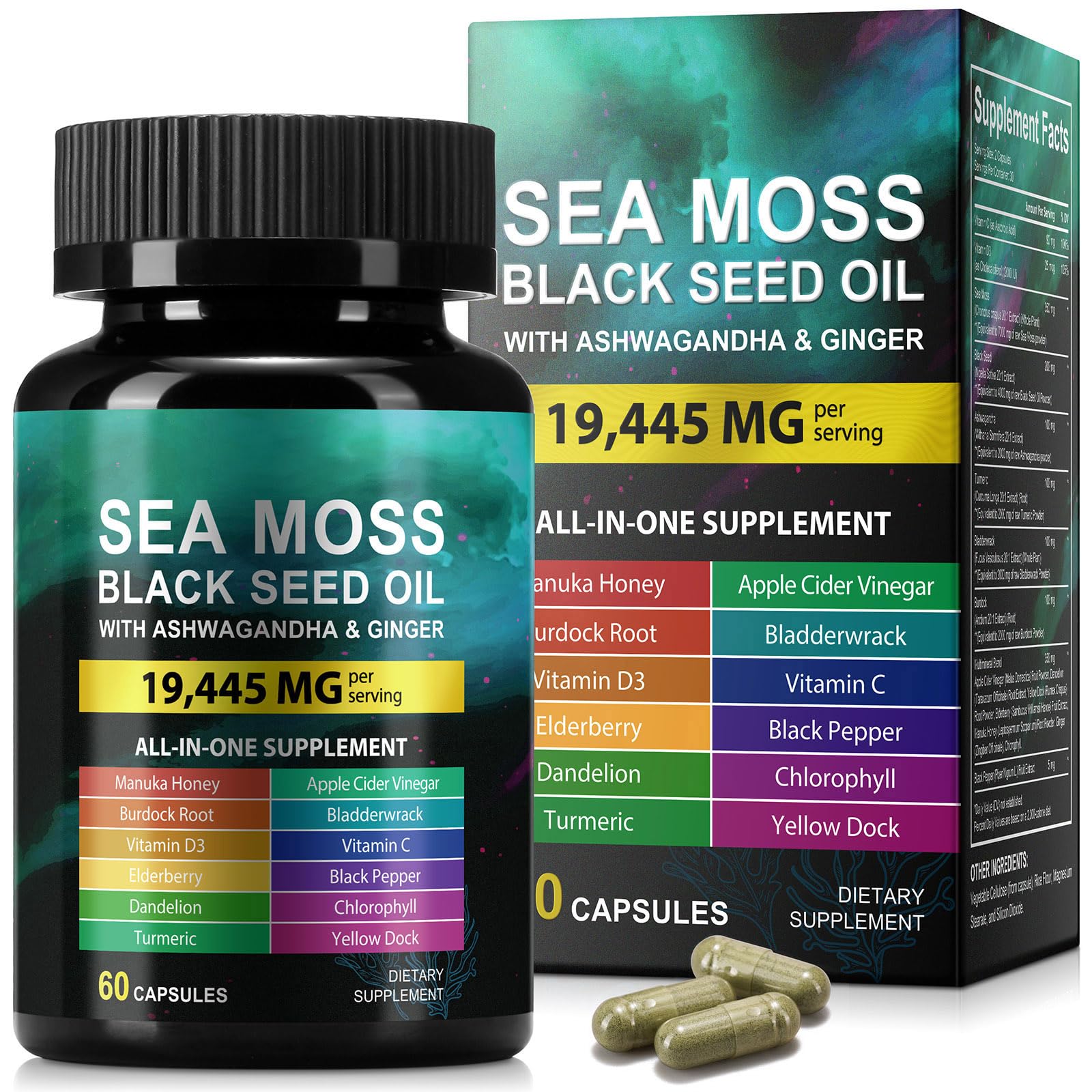
| Manuka Honey | we could not read this line |
|---|---|
| Burdock Root | we could not read this line |
| Vitamin D3 | we could not read this line |
| Elderberry | we could not read this line |
| Dandelion | we could not read this line |
| Turmeric | we could not read this line |
| Apple Cider Vinegar | we could not read this line |
| Bladderwrack | we could not read this line |
| Vitamin C | we could not read this line |
| Black Pepper | we could not read this line |
| Chlorophyll | we could not read this line |
| Yellow Dock | we could not read this line |
| ASHWAGANDHA & GINGER | 19,445 MG serving |
Printed on the package: DIETARY SUPPLEMENT
We read 13 lines from the package photograph. It is our transcript of the label, not the manufacturer’s panel, and it may be incomplete.
The public sources did not settle the marketing promises on this label.
Published research exists for ingredients in this formula. Whether this product’s doses match those studies could not be confirmed.
Ingredient research can support context, but it is not a trial of this exact product.
Headlines first. Open evidence only when you want the source trail.
These are evidence gaps, not strikes against the product.
We could not match an amount on this product to a studied range for the same ingredient, so these links are ingredient background rather than a measurement of this product.
Only the submitted seller page is identity-certain. Other destinations are shown as leads until a shared UPC/GTIN confirms the exact product.
Lowest New observed via Keepa on 2026-09-02.
View on Amazon ↗No matching product page was confirmed in the current record. Search results cannot be attached as this product until the UPC/GTIN matches.
Search iHerb ↗No matching product page was confirmed in the current record. Search results cannot be attached as this product until the UPC/GTIN matches.
Search Target ↗No matching product page was confirmed in the current record. Search results cannot be attached as this product until the UPC/GTIN matches.
Search Walmart ↗Prices and stock are point-in-time observations. Related pages are never used as product evidence. No affiliate links; LookCloser earns nothing from these sellers.
The full report shows every source, the exact unresolved question, and the documentation that would settle it.
Record built September 03, 2026. Sources: source listing observed at check time · USPTO Trademark Search · Keepa exact-listing history · NIH / published research · certification and regulator records where available. LookCloser publishes evidence and gaps; it does not advise for or against any supplement. Evidence-based corrections welcome.