“Certified”
Evidence →“GMP-certified” describes factory processes, not what is in the bottle. The claim does not name a certifier or public register that a shopper can check.
Checked against public sources on July 22, 2026 · LookCloser does not sell or recommend supplements.
Does the marketing hold up?
Testing claimed — documentation not found. The observed listing claims third-party testing without naming a lab or certifier. No product-bound report is saved, so the claim cannot be verified as stated. …
“Couldn’t verify” means we looked and found no public proof — not a mark against the product. Most supplement claims cannot be independently verified by anyone, so grey is the normal state of this industry.
| ercetin | 500 mg |
|---|
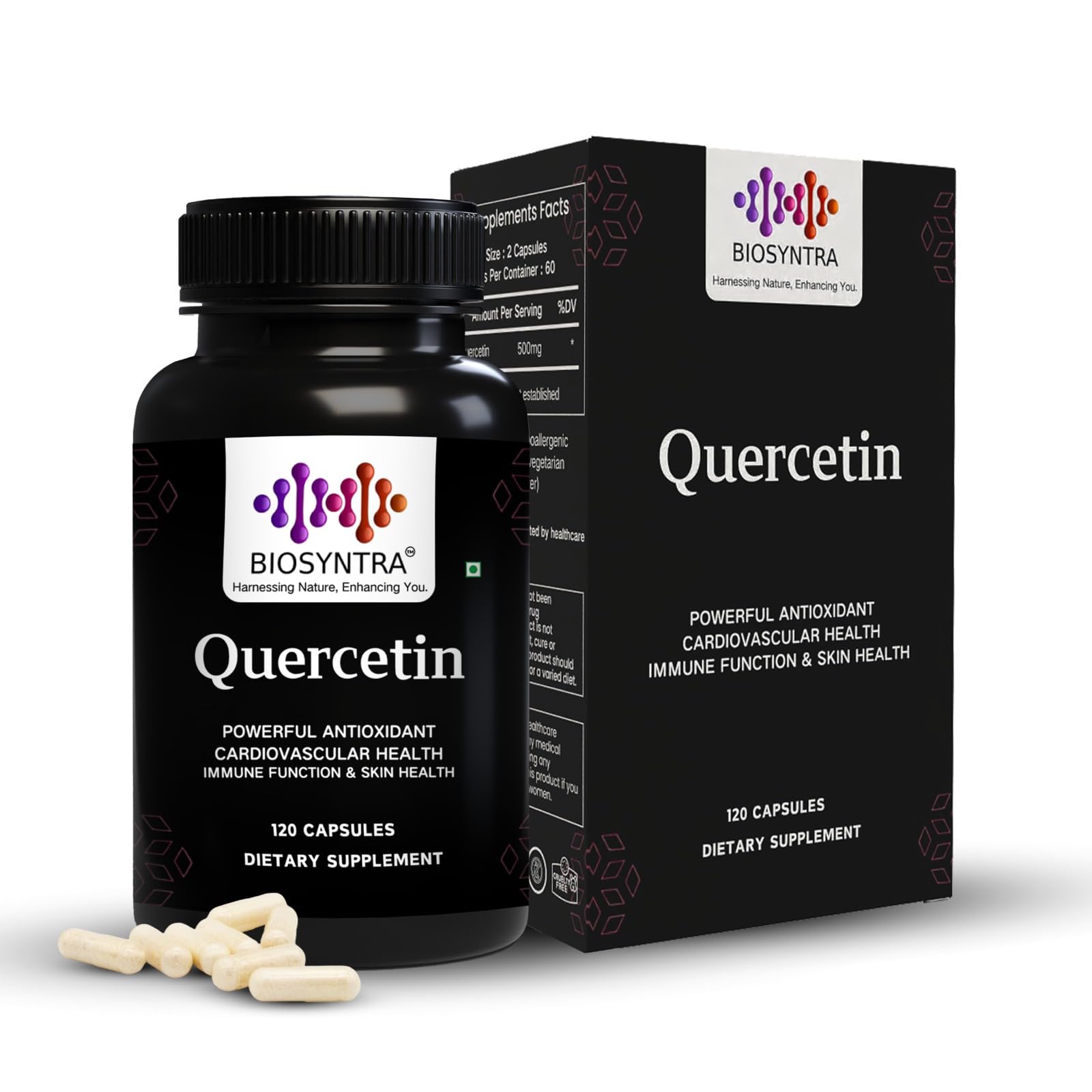
Printed on the package: Non-GMO · GMP Certified Facility · GMO FREE · Non-GMO & Gluten-Free · Hypoallergenic Formula · 100% NATURAL · GMP CERTIFIED PRACTICE · CRUELTY FREE
We read 1 lines from the package photograph. It is our transcript of the label, not the manufacturer’s panel, and it may be incomplete.
The public sources did not settle the marketing promises on this label.
“GMP-certified” describes factory processes, not what is in the bottle. The claim does not name a certifier or public register that a shopper can check.
Ingredient research can support context, but it is not a trial of this exact product.
No named laboratory or lot-specific certificate was found for this exact product. No exact brand product page was available for a document check. NSF, IFOS, USP, and Informed-Sport were not checked in this record. This is a public-evidence limit, not a finding that testing did not occur.
“Made in USA” can describe only final bottling. Ingredient-sourcing records were not located for this product.
We looked and found no public proof. That does not count against the product.
POWERFUL ANTIOXIDANT · Clean & Pure Ingredients
Headlines first. Open evidence only when you want the source trail.
You are being sold on an ingredient the verified panel does not separately declare. The brand should explain the mismatch.
The listing presents 500 mg for quercetin, but vision:google/gemini-2.5-flash does not contain a same-name quantified row. The saved image read may be incomplete, so this is a specific question to resolve rather than a contradiction.
Locked evidence record →Open the full source-linked findingEvery ingredient shows its real amount — nothing is hidden in a proprietary blend.
The panel gives a per-ingredient amount rather than hiding quantities inside a proprietary blend, so each one can be compared to published research.
Locked evidence record →Open the full source-linked findingThese are evidence gaps, not strikes against the product.
Open related seller leads before buying, then confirm the flavor, count, and serving size. Their prices are visible, but LookCloser does not claim savings until the pages share a UPC/GTIN.
Lowest New observed via Keepa on 2026-08-29.
View on Amazon ↗Open the brand storefront to search manually.
No defensible same-product page was saved from the brand catalog.
Check brand website ↗No matching product page was confirmed in the current record. Search results cannot be attached as this product until the UPC/GTIN matches.
Search iHerb ↗No matching product page was confirmed in the current record. Search results cannot be attached as this product until the UPC/GTIN matches.
Search Target ↗No matching product page was confirmed in the current record. Search results cannot be attached as this product until the UPC/GTIN matches.
Search Walmart ↗Prices and stock are point-in-time observations. Related pages are never used as product evidence. No affiliate links; LookCloser earns nothing from these sellers.
The full report shows every source, the exact unresolved question, and the documentation that would settle it.
Record built September 03, 2026. Sources: source listing observed at check time · USPTO Trademark Search · Keepa exact-listing history · NIH / published research · certification and regulator records where available. LookCloser publishes evidence and gaps; it does not advise for or against any supplement. Evidence-based corrections welcome.