LookCloser.aipublic supplement evidence
Exact product checked · barcode not publishedViT4US · observed 2026-07-23Package says distributed by: Walmart Inc. · AR 72716
Quick read · ViT4US

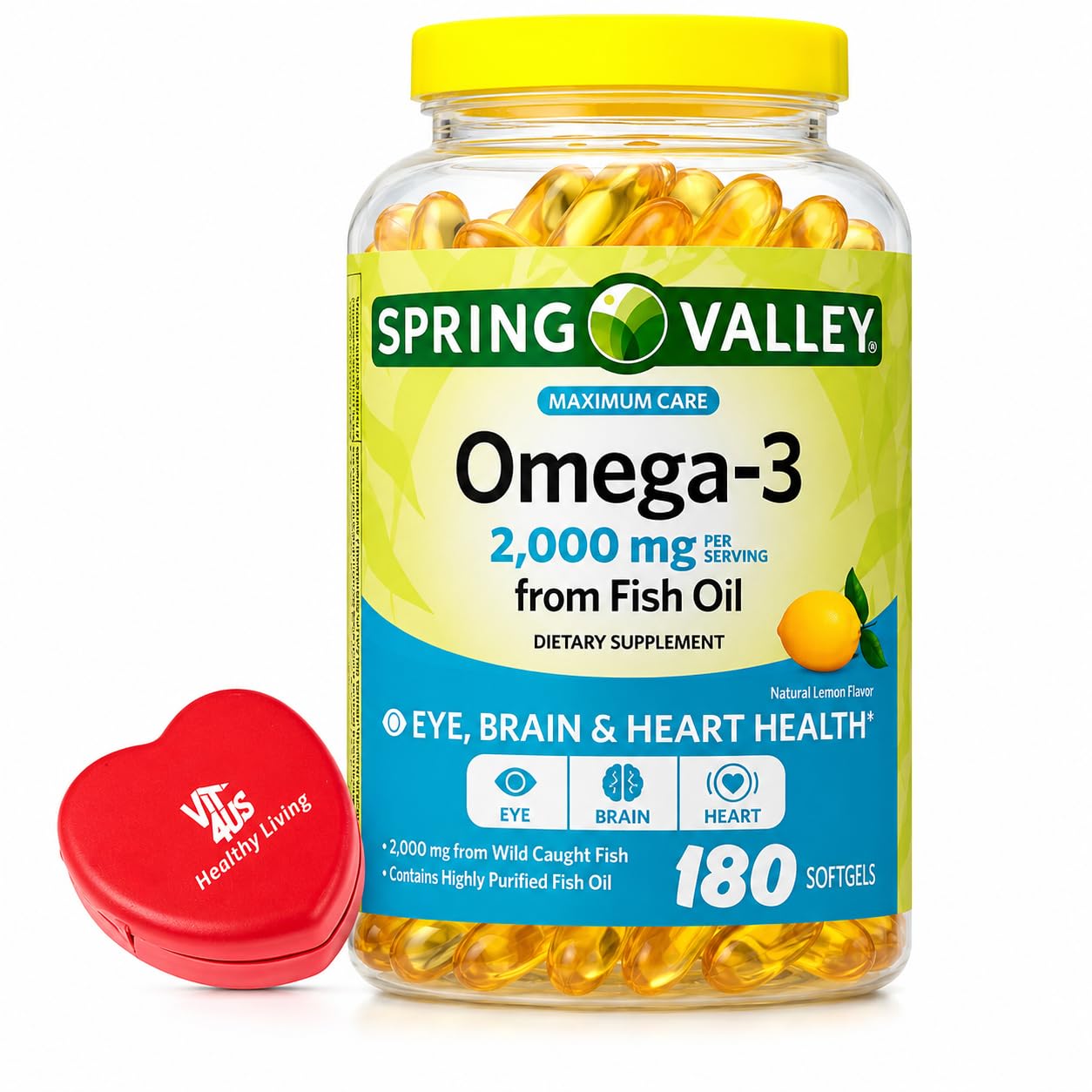
Spring Valley Maximum Care Omega-3 Fish Oil 2,000 mg

Marketing check: 1 remains partly or independently unverified.

Rebuilt from public sources on July 24, 2026 · evidence availability is not a safety or effectiveness verdict.

180softgels · 90 servings
Marketing claims, checked

Does the marketing hold up?

Couldn’t verify means public proof was not found; it is not a mark against the product. Ingredient research is not treated as a trial of this exact product.

Partly confirmed1

Advertised health or performance benefit

Published research exists for ingredients in this formula — see Related research below. Whether this product’s doses match those studies could not be confirmed.

Evidence →
Quick read · 2 useful findings

What is worth knowing.

Headlines first. Open evidence only when you want the source trail.

Needs explanationIs the label honest?

Panel carries documented template or translation artifacts

Template, translation, or duplicate-row artifacts are reasons to trust the printed numbers less until the brand supplies a clean, product-specific panel.

Evidence and sources

The panel carries these quoted observations: “Calories (energy) has no unit”. US-market labels are produced under cGMP controls; these are template or translation artifacts worth checking, not proof that the label is fabricated or that the product is unsafe.

Locked evidence record →Open the full source-linked finding
Checks outIs the label honest?

Every declared ingredient has an amount · 6 quantified rows.

You can compare each declared dose with research instead of guessing what is hidden inside a blend.

Evidence and sources

The panel gives a per-ingredient amount rather than hiding quantities inside a proprietary blend, so each one can be compared to published research.

Locked evidence record →Open the full source-linked finding
What remains open 1
  • No dated review-history series is on file yet.

These are evidence gaps, not strikes against the product.

Research behind the findings

Dose and research context

Ingredient context used alongside the captured panel. These sources do not test this product or establish safety or effectiveness.

Dose vs research

2.96 g declared

The panel declares 2,960 mg EPA + DHA per serving, above one studied 300–1800 mg/day context. The fish-oil concentrate total is not substituted for EPA + DHA.

Declared dose sits within the cited study context
Buying options

Where you can check or buy it

Only the submitted seller page is identity-certain. Other destinations are shown as leads until a shared UPC/GTIN confirms the exact product.

Amazon

Submitted listing
$49.97

Lowest New observed via Keepa on 2026-07-24.

View on Amazon ↗

iHerb

Not confirmed
No price confirmed

No matching product page was confirmed in the current record. Search results cannot be attached as this product until the UPC/GTIN matches.

Search iHerb ↗

Target

Not confirmed
No price confirmed

No matching product page was confirmed in the current record. Search results cannot be attached as this product until the UPC/GTIN matches.

Search Target ↗

Walmart

Not confirmed
No price confirmed

No matching product page was confirmed in the current record. Search results cannot be attached as this product until the UPC/GTIN matches.

Search Walmart ↗

Prices and stock are point-in-time observations. Related pages are never used as product evidence. No affiliate links; LookCloser earns nothing from these sellers.

Want the complete evidence trail?

The summary stops at product-specific facts. The full report preserves every source, calculation, limitation, and unresolved check for review or sharing.

Read / share full evidence →
Open the full evidence trailSources, edge cases, and every unresolved check

Confirmed evidence

What checked out01

These checks found support in the public record. They confirm specific facts, not the product as a whole.

Every ingredient amount is disclosed

The panel gives a per-ingredient amount rather than hiding quantities inside a proprietary blend, so each one can be compared to published research.

Confirmed

Documented concerns

What needs caution01

These are documented contradictions or claims that need more evidence. They are separate from missing data.

!

Panel carries documented template or translation artifacts

The panel carries these quoted observations: “Calories (energy) has no unit”. US-market labels are produced under cGMP controls; these are template or translation artifacts worth checking, not proof that the label is fabricated or that the product is unsafe.

Caution

Unresolved public record

What is still missing04

We looked for these signals but could not settle them from public sources. A gap is not a strike.

Review-count history: not available

Marketplace rating not shown★ — rating count unavailable. No exact-listing count history was available, so no review-pattern claim is made.

No data

EPA + DHA dose is above one studied range

The panel declares 2,960 mg EPA + DHA per serving (2 Softgels). One randomized dose-response trial used 300–1,800 mg/day; omega-3 studies vary widely. This is research context, not a recommendation or safety verdict.

No data

Multi-ingredient formula — panel read, serving weight unknown

We read the full Supplement Facts panel from the listing-image panel (below), but the label doesn’t state a serving weight, so the arithmetic can’t run. A gap in the label’s information, not evidence of a problem.

No data

Research context is available for the listed ingredients

Published sources describe how omega-3 have been studied. This is ingredient context only; the record does not establish that this product delivers the studied dose or outcome. Sources: NIH ODS — Omega-3 Fatty Acids fact sheet, PubMed dose-response trial.

No data

What to ask and check

What would settle the open questions

Why is this shown?
Everything we couldn’t verify is something a person can still ask about. Rather than leave gaps sitting as dead ends, we turn each one into a specific question — the exact document, citation, or number that would settle it — plus the things you can confirm yourself with the bottle in your hand.

Ask the brand or seller

1

What is the product’s UPC or GTIN?

The barcode is how a product gets matched to outside records — certification registries, label databases, recall data. Without it, almost nothing can be cross-checked.

2

Is this label filed with NIH’s Dietary Supplement Label Database (DSLD)?

Filing is voluntary, so absence proves nothing — but a filed label puts the full ingredient table on public record where anyone can read it.

Most brands and sellers publish a contact route. A clear answer adds evidence to the record; no answer leaves the question open.

Check for yourself — no one’s permission needed

1

Compare the panel on the bottle in your hand to the one shown in this record.

Ours was read from listing photos and can contain reading errors. The physical label is the source of truth — if they disagree, tell us and we’ll correct the record.

2

Check the lot number and expiry on the bottle against any COA you’re given.

A certificate that doesn’t name your lot doesn’t describe what you’re holding.

These are the open questions on this specific record — not a warning about the product, and not a suggestion to buy or avoid it. Getting them answered is how you decide for yourself.

Record built July 24, 2026. Sources: source listing observed at check time · USPTO Trademark Search · Keepa exact-listing history · NIH / published research · certification and regulator records where available. LookCloser publishes evidence and gaps; it does not advise for or against any supplement. Evidence-based corrections welcome.